Wills, Trusts and Probate
Estate planning and administration support to protect your wishes, assets and loved ones.
We are expert Lasting Power of Attorney solicitors, here to help you appoint trusted people to manage your finances and make care decisions, giving you control over your future before it’s needed.
Our team helps you create Lasting Powers of Attorney (LPA), appointing people you trust to manage your affairs if you lose mental capacity. We prepare property and financial affairs LPAs and health and welfare LPAs, register them with the Office of the Public Guardian, and ensure they’re properly executed. You choose who acts for you and how they can act.
Appointing attorneys to manage your finances, property, bank accounts, and investments if you lose capacity.
Appointing attorneys to make decisions about medical treatment, care arrangements, and living situations if you lack capacity.
Choosing appropriate attorneys and replacement attorneys, and deciding whether they act jointly, jointly and severally, or in specific combinations.
Registering LPAs with the Office of the Public Guardian, completing all forms correctly, and ensuring valid execution.
Including binding instructions and non-binding preferences guiding how your attorneys should act when making decisions on your behalf.
If you lose mental capacity without LPAs in place, your family cannot automatically manage your finances or make care decisions for you. They would need to apply to the Court of Protection for deputyship: a costly, time-consuming court process with ongoing supervision, which you can avoid by making an LPA while you have capacity.
LPAs are straightforward to set up, give you control over who makes decisions and how, and avoid court involvement entirely. We recommend making both types of LPA at the same time, while you have capacity.
Attorneys can manage bank accounts, pay bills, sell property, and make investment decisions. This LPA can be used while you have capacity if you authorise it, or only when you lack capacity.
Attorneys make decisions about medical treatment, care home placement, daily care, and life-sustaining treatment. This LPA can only be used when you lack capacity to make the specific decision yourself.
We recommend making both types together. They cover different decisions, may appoint different attorneys, and together provide comprehensive protection if you lose capacity for any reason.
LPAs often connect with a range of planning and protection services. Our team provides specialist support across all related matters.
Estate planning and administration support to protect your wishes, assets and loved ones.
Support administering estates, handling probate, and managing responsibilities after bereavement.
Advice on creating, managing, and using trusts to protect assets.
Clear advice to prepare a valid Will reflecting your wishes.
Practical advice on Wills, trusts, and inheritance tax planning to help protect your assets and future.
William, our virtual assistant, can answer your questions about finding the right LPA advice.
Fosters Solicitors specialises in Lasting Powers of Attorney and Court of Protection work across Norfolk and Suffolk. Our team prepares a high volume of LPAs each year, ensuring proper execution, appropriate attorney appointments, and successful registration with the Office of the Public Guardian.
Our experts act as certificate providers, confirming you understand the LPA and are not under pressure when making it.
We handle Office of the Public Guardian registration as part of our service, ensuring your LPA is valid when needed.
Transparent fixed fees for preparing and registering both types of LPA, with no hidden costs.
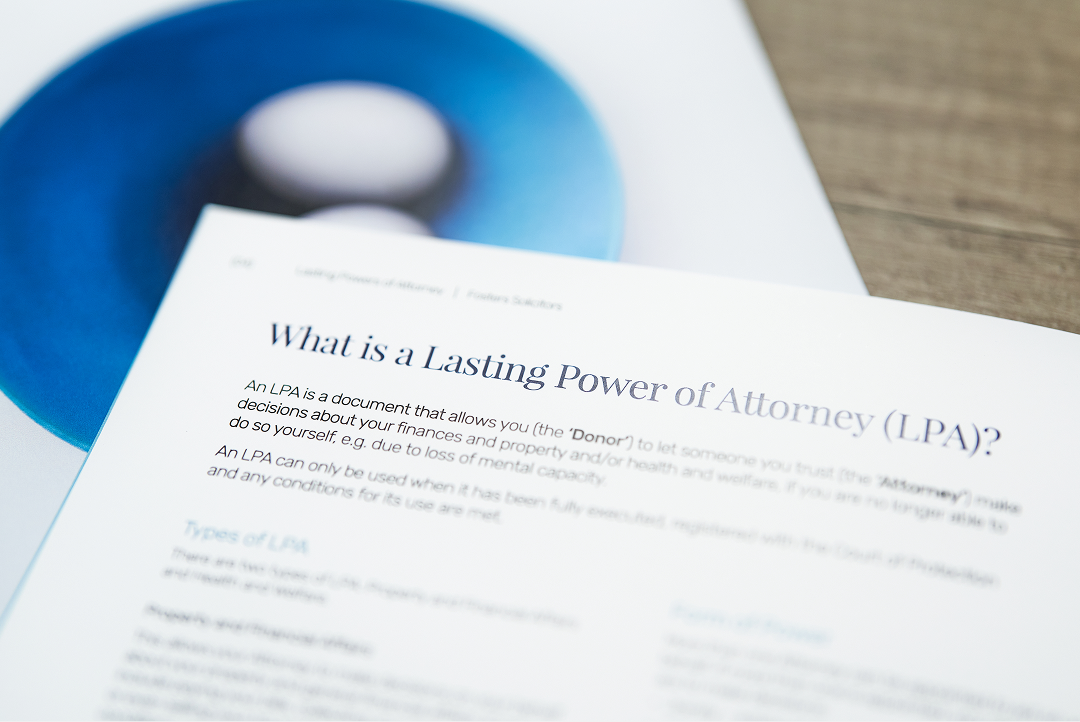
A Lasting Power of Attorney (LPA) is a legal document appointing people you trust to make decisions on your behalf if you lose mental capacity. Two types exist: property and financial affairs LPAs covering financial decisions, and health and welfare LPAs covering medical and care decisions. LPAs must be registered with the Office of the Public Guardian before use. They give your chosen attorneys legal authority to act for you without court applications, providing protection and control if you cannot make decisions yourself.
If you lose mental capacity without an LPA, your family cannot automatically manage your finances or make care decisions for you. They must apply to the Court of Protection for deputyship, a costly and time-consuming process with ongoing court supervision. LPAs are quicker, cheaper, and more flexible. They let you choose who makes decisions, give specific instructions, and avoid court involvement. Everyone over 18 should consider making LPAs, whatever their age or health.
Choose people you trust completely who are responsible, organised, and willing to act. Consider their age, health, location, and relationship with other family members. Many people appoint spouses, adult children, siblings, or close friends. You can appoint multiple attorneys to act jointly (all must agree), jointly and severally (they can act independently), or jointly for some decisions and jointly and severally for others. We recommend naming replacement attorneys in case your first choices cannot act when needed.
Property and financial affairs LPAs allow attorneys to manage finances, pay bills, access bank accounts, sell property, claim benefits, and make investment decisions. They can be used as soon as registered if you authorise this, or only when you lack capacity. Health and welfare LPAs allow attorneys to make decisions about medical treatment, care home placement, daily care, and life-sustaining treatment. They can only be used when you lack capacity to make the specific health or welfare decision in question.
Contact us for our current LPA fees. We offer a reduced rate when you make both types of LPA together. The Office of the Public Guardian charges a registration fee per LPA, though reductions apply for those on lower incomes. Contact us for a full breakdown of costs including legal fees, registration fees, and VAT. This is significantly less than the cost of a Court of Protection deputyship application if you were to lose capacity without LPAs in place.
A property and financial affairs LPA can take effect as soon as it is registered if you authorise this in the document. This allows attorneys to help you manage finances while you still have capacity. Alternatively, you can restrict it to only take effect when you lack capacity. A health and welfare LPA can only be used when you lack capacity to make the specific decision in question. Capacity is assessed on a decision-by-decision basis by a doctor or healthcare professional.
We aim to prepare your LPA documents promptly once we have all the information we need. Once signed and witnessed, we submit them to the Office of the Public Guardian (OPG) for registration. The OPG’s processing time for registrations varies. We’ll keep you updated on progress. You cannot use the LPA until it is registered. We recommend making LPAs well in advance rather than waiting, as you must have mental capacity at the time of making them. If capacity is lost before registration, it may be too late.
Our Wills, Trusts & Probate team is comprised of compassionate and skilled legal professionals dedicated to supporting you through the most sensitive and personal legal matters.
Book a consultation or search our knowledge base for answers.