Capacity and Care
Support for vulnerable people, families, deputies, and capacity related decisions.
We are expert Lasting Powers of Attorney and deputyship lawyers, here to help you plan ahead and protect the people you love, whether setting up LPAs now or applying for deputyship when needed.
We prepare property and financial affairs LPAs and health and welfare LPAs, register them with the Office of the Public Guardian, and apply for deputyship when people lack capacity without LPAs. We advise attorneys and deputies on their duties and handle ongoing supervision requirements. Specialist expertise means you protect vulnerable people appropriately.
Preparing property and financial affairs LPAs and health and welfare LPAs, appointing trusted people to make decisions.
Applying to the Court of Protection for deputyship orders when people lack capacity without Lasting Powers of Attorney.
Advising on who to appoint as attorney, including choosing suitable people, appointing replacement attorneys, and understanding the responsibilities involved.
Supporting deputies with annual reporting, Office of the Public Guardian supervision, and ongoing decision-making responsibilities.
Registering Lasting Powers of Attorney with the Office of the Public Guardian so they are ready to use when needed.
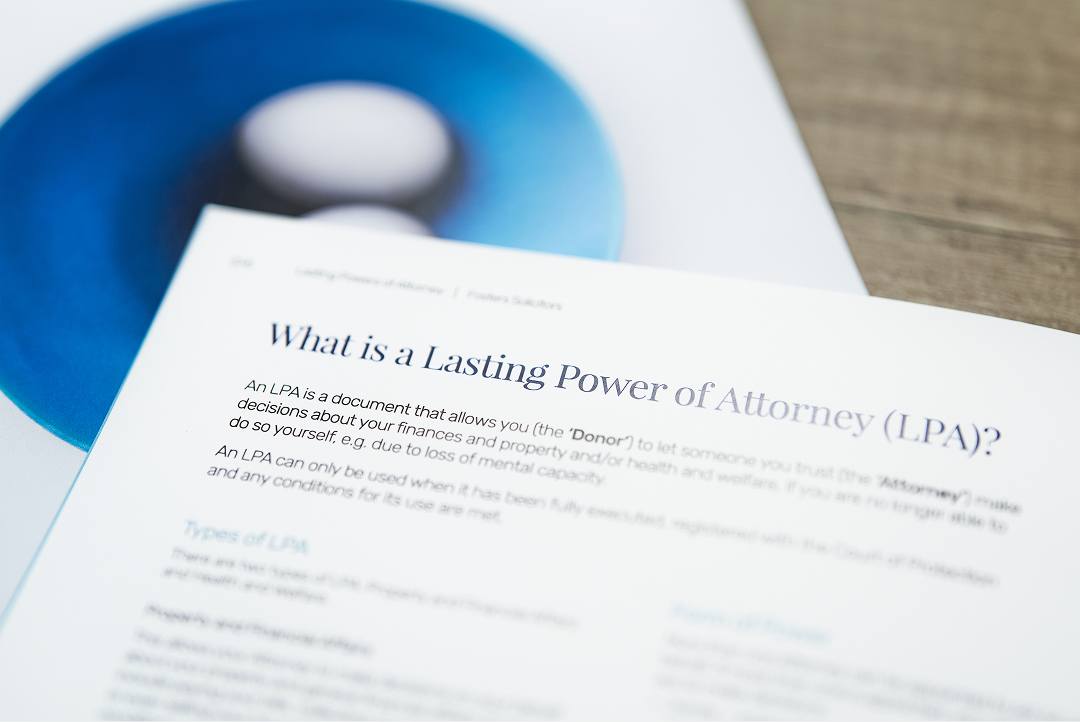
Lasting Powers of Attorney are quicker, cheaper, and more flexible than deputyship. Creating LPAs while you have capacity prevents expensive Court of Protection applications if you later lose capacity.
Deputyship is necessary when someone lacks capacity without LPAs. It involves a costly, time-consuming court application with ongoing supervision, which you can avoid by making an LPA while you have capacity.
Creating Lasting Powers of Attorney appointing attorneys for property and financial affairs and health and welfare decisions, avoiding future deputyship applications.
Applying for deputyship appointments when family members lack capacity to manage their own affairs and haven't created Lasting Powers of Attorney.
Registering Lasting Powers of Attorney with the Office of the Public Guardian, managing the registration process, and ensuring your LPA is valid and ready to use.
Lasting Powers of Attorney and deputyship connect with broader capacity planning. Our team provides comprehensive support.
Support for vulnerable people, families, deputies, and capacity related decisions.
Advice for Court of Protection applications, decisions, disputes, and safeguards.
Representation in Court of Protection disputes involving welfare or financial decisions.
William, our virtual assistant, can answer your questions about powers of attorney and deputyship
Fosters Solicitors specialises in Lasting Powers of Attorney and Court of Protection work. Our team are expert in preparing LPAs and handling complex deputyship applications, combining technical expertise with compassionate service protecting vulnerable people.
Transparent fixed fees for preparing and registering Lasting Powers of Attorney with no hidden costs.
Our specialists act as certificate providers for LPAs confirming you understand and aren't under pressure.
Extensive experience with complex deputyship applications ensuring successful Court of Protection orders.
Lasting Powers of Attorney are documents you make while you have capacity, appointing attorneys to make decisions if you later lose capacity. You choose your attorneys and can give them specific instructions. LPAs are relatively quick and inexpensive to create.
Deputyship involves court applications when someone lacks capacity without LPAs. Family members must apply to be appointed deputies, a costly and time-consuming court process. Deputies face ongoing court supervision and restrictions not applicable to attorneys. LPAs are always preferable to deputyship.
Create LPAs as soon as possible, regardless of age or health. You must have mental capacity when making LPAs, so waiting until health deteriorates may be too late. Many people create LPAs when making Wills or when reaching retirement age.
LPA registration times with the Office of the Public Guardian vary. We’ll keep you updated on progress. They can’t be used until registered. Creating LPAs early ensures they’re ready if needed. Even young healthy people should have LPAs as accidents or unexpected illness can happen at any age.
Property and financial affairs attorneys manage bank accounts, pay bills, sell property, claim benefits, make investments, and handle all financial matters. These LPAs can be used while you have capacity if you authorise this, or only when you lack capacity.
Health and welfare attorneys make decisions about medical treatment, care home placement, daily care, and life-sustaining treatment. These LPAs can only be used when you lack capacity to make specific health and welfare decisions yourself. Attorneys must always act in your best interests.
Deputies must act in the person’s best interests following Mental Capacity Act principles. Property and affairs deputies manage finances prudently, keep detailed accounts, submit annual reports to the Office of the Public Guardian, and apply to court before making major decisions.
Deputies must keep the person’s money separate from their own, make records of all transactions, and can face removal and personal liability for breaches. Health and welfare deputies make care and treatment decisions but are much less common than property and affairs deputies.
Deputyship application costs depend on the complexity of the case and include legal fees, court fees, and medical evidence. Contact us for an estimate. Complex or disputed applications cost more.
These costs can usually be paid from the person’s estate subject to court approval. Compare this to the lower cost of making LPAs while you still have capacity. Contact us for our current LPA fees. Deputyship is always more expensive than creating LPAs in advance.
You can’t be someone’s attorney if they lack capacity, as only people with capacity can create LPAs. If someone loses capacity without creating LPAs, you must apply for deputyship instead. However, if you’re already someone’s attorney under a registered LPA, you don’t need deputyship as the LPA gives you authority.
If an LPA doesn’t cover all decisions needed, you might be an attorney for some matters and need deputyship for others. The court can appoint existing attorneys as deputies if appropriate. Having LPAs in place always avoids the need for deputyship applications.
If multiple attorneys are appointed to act jointly (all must agree), disagreements can paralyse decision-making. The LPA might specify how disputes are resolved, or applications to court may be needed. If attorneys act jointly and severally (independently), individual attorneys can make decisions without others’ agreement.
For deputies, the court resolves disputes between joint deputies or between deputies and family members. Deputies who persistently disagree may face removal. Choosing appropriate attorneys or deputies and clearly defining their powers prevents many disputes. Professional deputies can be appointed when family members can’t work together.
Our team of capacity and care specialists is comprised of compassionate and skilled legal professionals dedicated to supporting you through the most sensitive and personal legal matters.
Book a consultation or search our knowledge base now.